QUALITY OF LIFE
Quality of life is not one big decision. It is what daily life looks like now.
Quality of life is often talked about as if it were one question with one answer. In everyday life, it can be more useful to look at the smaller things that shape your dog’s day—comfort, movement, rest, appetite, engagement, familiar routines, and time with you.
A senior dog can still enjoy meaningful parts of life while needing more support than before. One difficult day does not tell you everything, and one good moment does not erase the parts that are becoming harder.
The goal is to notice the pattern: what still brings comfort or interest, what takes more effort, what has changed, and whether those changes are becoming more frequent or harder to recover from.
LOOK AT THE WHOLE DAY
What still feels like a good part of your dog’s day?
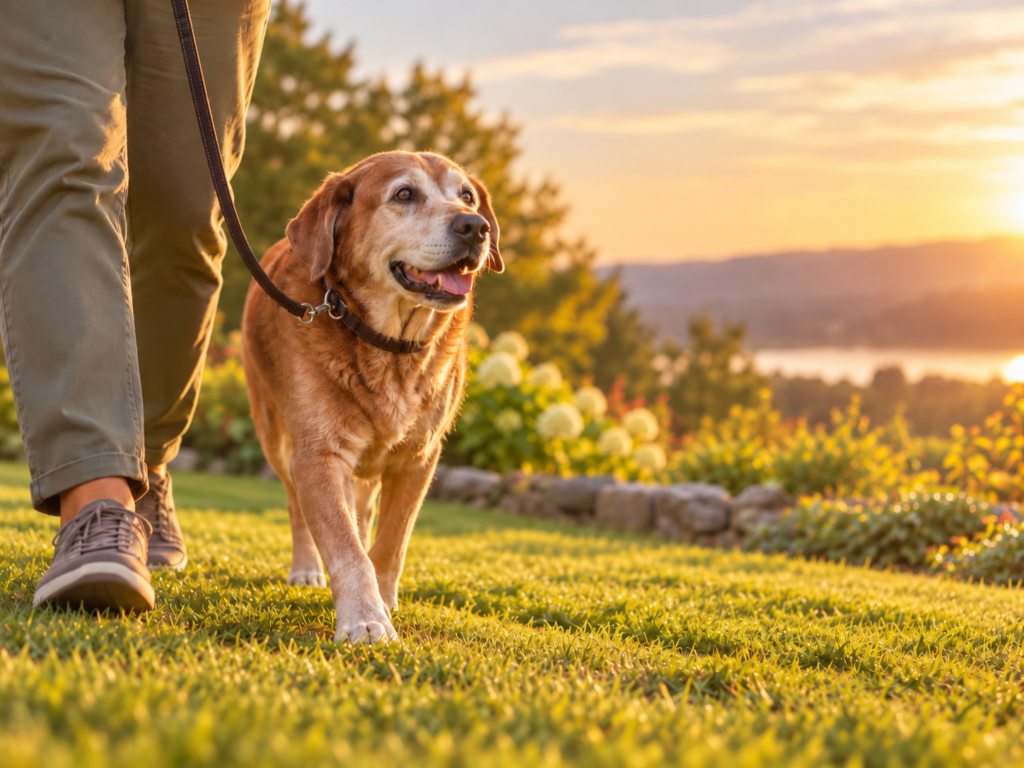
Quality of life isn’t only about what has become difficult. It also helps to notice what your dog still seems to enjoy, seek out, or settle into comfortably.
Look across the whole day. Small moments of comfort, interest, connection, and choice can tell you as much as the harder moments—especially when you begin noticing whether those good parts are staying steady or becoming harder to reach.
COMFORT & REST
Where does your dog still seem able to relax?
Notice the places and times when your dog settles comfortably, sleeps peacefully, stretches out, or simply seems at ease in their surroundings.
EVERYDAY ROUTINES
What parts of the day still feel familiar?
Meals, treats, going outside, greeting you, resting nearby, or following a familiar routine may still bring interest and a sense of normalcy.
CONNECTION & INTEREST
What still draws your dog in?
Look for interest in affection, family activity, sniffing outside, favorite people, toys, sounds, or simply being near you. Engagement does not have to look as energetic as it once did to still matter.
MOVEMENT & CHOICE
Where can your dog still choose what they want to do?
Notice whether your dog can still move toward a favorite bed, ask to go outside, change resting places, approach you for attention, or leave a situation when they have had enough.
NOTICE WHAT IS STILL THERE
A slower or quieter life can still contain meaningful moments.
Try not to compare every day with the dog your dog was years ago. Compare today with their more recent pattern. What still brings comfort or interest—and is that changing?
WHAT IS BECOMING HARDER
Notice the effort behind the activity, not just whether your dog can still do it.
A senior dog may still be able to do something they’ve always done—but it may now take more time, more effort, or more recovery afterward.
That difference can be easy to miss when we focus only on whether the activity still happens. Walking to the door, getting into bed, finishing a meal, or going outside may still be possible while becoming noticeably harder.
Try to notice how much effort the activity seems to require, what happens immediately afterward, and whether your dog starts avoiding something they used to choose on their own.
LOOK BEYOND “CAN” OR “CAN’T”
The question is often: “How hard has this become?”
A task can still be possible and still be taking more from your dog than it used to. That change in effort is worth noticing.
MORE EFFORT
Does the same activity take longer or look harder?
Notice slower starts, repeated attempts, hesitation, heavier breathing, slipping, stopping partway through, or needing more help than before.
MORE RECOVERY
What happens after the activity is over?
Your dog may complete the walk, climb the step, or finish the routine—but then need much longer to settle, rest, or feel comfortable again.
LESS CHOICE
Is your dog beginning to avoid things they once chose?
Watch for skipped walks, reluctance to approach stairs, less interest in moving to another room, or choosing to stay put when your dog once followed familiar routines easily.
The activity itself is only part of the picture. Effort, recovery, and willingness can tell you how the experience is changing for your dog.
COMFORT & DISCOMFORT
Look for what helps your dog settle, recover, and feel at ease.
Comfort isn’t always obvious from one moment. A dog may still eat, walk, greet you, or follow a familiar routine while having more difficulty getting comfortable before, during, or afterward.
Instead of trying to decide exactly what your dog is feeling, notice the situations where they seem most settled and the ones where comfort becomes harder to maintain. Those patterns give you something more specific to watch and describe.
SETTLING
Can your dog find a comfortable place and position?
Notice whether your dog settles fairly easily or spends more time circling, changing locations, standing back up, or repeatedly repositioning before finally resting.
STAYING COMFORTABLE
What seems to interrupt rest or ease?
Watch for moments when your dog leaves a resting place unexpectedly, becomes restless after lying down, hesitates before moving, or seems unable to stay comfortable for as long as before.
RECOVERY
How easily does your dog settle again afterward?
After a walk, trip outside, meal, stairs, play, or another everyday activity, notice how long it takes your dog to rest comfortably and return to their usual pattern.
LOOK FOR WHAT CHANGES COMFORT
Sometimes the useful clue is what makes things easier.
A different resting place, a shorter walk, better footing, more time to recover, or a quieter part of the routine may seem to help your dog settle more comfortably. Notice those differences without assuming they explain the cause.
If discomfort is new, persistent, worsening, or beginning to limit activities your dog normally manages, bring that change to your veterinarian rather than trying to explain it from behavior alone.
ENGAGEMENT & CONNECTION
What still gives your dog a reason to lean into the day?
Engagement doesn’t have to look the way it did when your dog was younger. A shorter walk, a slow sniff outside, resting near you, enjoying a meal, or lifting their head when a familiar person comes into the room can still be meaningful.
The useful question is not whether your dog is as active as they used to be. It is whether there are still parts of the day they seem interested in, choose for themselves, or respond to with comfort and curiosity.
Notice what still brings your dog toward the world—and whether those moments are staying steady, becoming less frequent, or requiring more effort than before.
LET YOUR DOG DEFINE WHAT MATTERS
Meaningful does not have to mean energetic.
A quiet moment in the sun, choosing to sit beside you, sniffing the same favorite patch of grass, or looking forward to dinner may carry more weight now than a long walk or active play once did.
INTEREST
What still catches your dog’s attention?
Notice interest in food, smells, familiar sounds, people arriving home, going outside, favorite resting places, or anything else your dog still seems drawn toward.
CONNECTION
How does your dog still seek closeness?
Connection may look like following you from room to room, leaning into touch, resting nearby, making eye contact, greeting you, or simply choosing to be part of the household activity.
CHOICE
What does your dog still choose on their own?
Pay attention to the small decisions your dog still makes—where to rest, whether to go outside, when to approach you, what to sniff, or when they have had enough and want to step away.
What matters most is not how much your dog does—it is whether there are still moments they seem to enjoy, choose, or connect with.
GOOD DAYS, HARD DAYS & TRENDS
Don’t just count the days. Notice what made them feel different.
Calling a day “good” or “bad” can be useful shorthand, but the label alone does not tell you what actually changed. Two difficult days may be difficult for completely different reasons.
Instead, look for the details underneath the day. What went more easily? What required more effort? What helped? What did your dog seem to enjoy—and how well did they recover after the harder parts?
WHAT WENT WELL
What still felt comfortable or meaningful?
Notice meals that went well, comfortable rest, an enjoyable walk or sniff outside, affection, easy movement, familiar routines, or moments when your dog seemed settled and interested.
WHAT WAS HARDER
What took more effort than usual?
Look for hesitation, restlessness, difficulty getting comfortable, slower movement, skipped activities, accidents, reduced interest, or anything that seemed harder than your dog’s recent normal.
WHAT HAPPENED NEXT
How did your dog recover afterward?
A hard moment may pass quickly, or it may affect the rest of the day. Notice how long it takes your dog to settle, rest, eat, reconnect, or return to their usual routine.
COMPARE THE PATTERN
The trend matters more than a single label.
A difficult day deserves attention, but a pattern across several days gives you more context.
Frequency — How often are the harder moments happening?
Intensity — Do they seem about the same, or are they becoming more difficult?
Recovery — Is your dog returning to their usual pattern as easily as before?
You don’t need to turn every day into a score. A few consistent observations can make it easier to see whether your dog’s overall pattern is staying fairly steady or beginning to shift.
WHEN TO TALK WITH YOUR VETERINARIAN
Bring the pattern—not a diagnosis.
You don’t need to figure out why your dog is changing before you call your veterinarian. What helps most is being able to describe what you are seeing clearly.
Changes in comfort, movement, appetite, sleep, toileting, interaction, or familiar routines can have many possible explanations. A veterinary exam helps put those observations into the larger medical picture.
Pay particular attention when a change is new, becoming more frequent, affecting several parts of the day, or making activities your dog normally manages noticeably harder.
YOU DO NOT NEED THE ANSWER FIRST
“Something’s changed” is enough reason to start the conversation.
Your notes can help show when the change began, how often it happens, what makes it better or worse, and how your dog responds afterward.
BRING THESE OBSERVATIONS
Give your veterinarian the pattern in plain language.
A USEFUL QUESTION TO ASK
“What should I watch for next?”
That question can help turn the visit into a plan for what to observe, what changes matter, and when your veterinarian wants to hear from you again.
DO NOT WAIT ON A RAPID OR SEVERE CHANGE
Seek prompt veterinary care if your dog has a sudden or severe change, is struggling to breathe, collapses, cannot stand or walk normally, appears to be in significant distress, or you are concerned something urgent is happening.
KEEP THE WHOLE PICTURE VISIBLE
You don’t have to remember every change. Write down what matters.
Quality of life becomes easier to understand when you can look back at patterns instead of relying on one difficult moment or trying to remember everything at once.
Notice what still feels meaningful. Track what is becoming harder. Compare what changes. Then bring that clearer picture to your veterinarian when you need help deciding what comes next.
Notice. Track. Compare. Ask.
This tracker is for recording observations and patterns. It does not diagnose your dog or replace veterinary guidance.